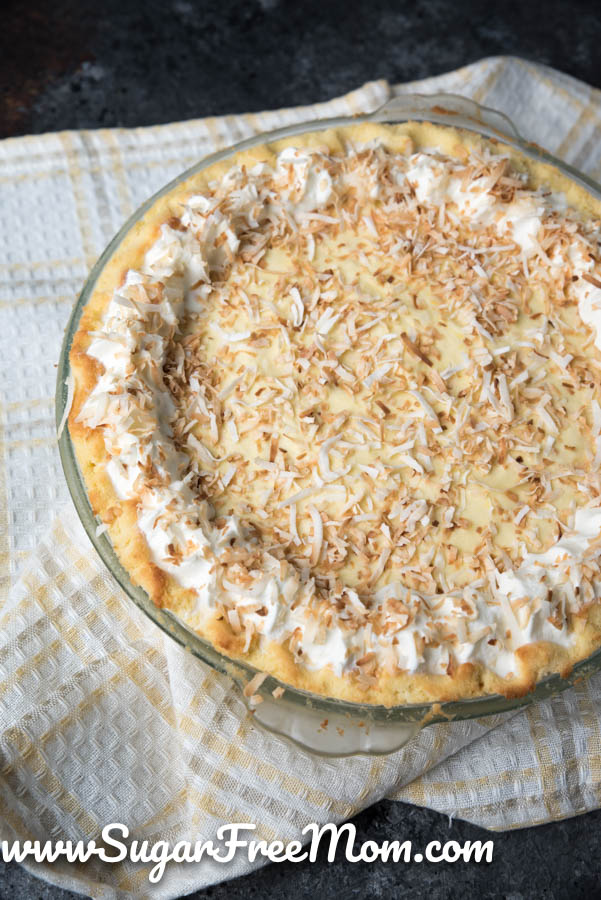
This easy sugar-free coconut cream pie is pure nostalgia with a modern, low-carb twist. Creamy, rich, and deeply coconut-forward, this classic dessert has been completely transformed into a keto dessert that fits beautifully into a low-carb or keto diet—without sacrificing flavor, texture, or that old-fashioned comfort we all love.
Sugar-Free Coconut Cream Pie
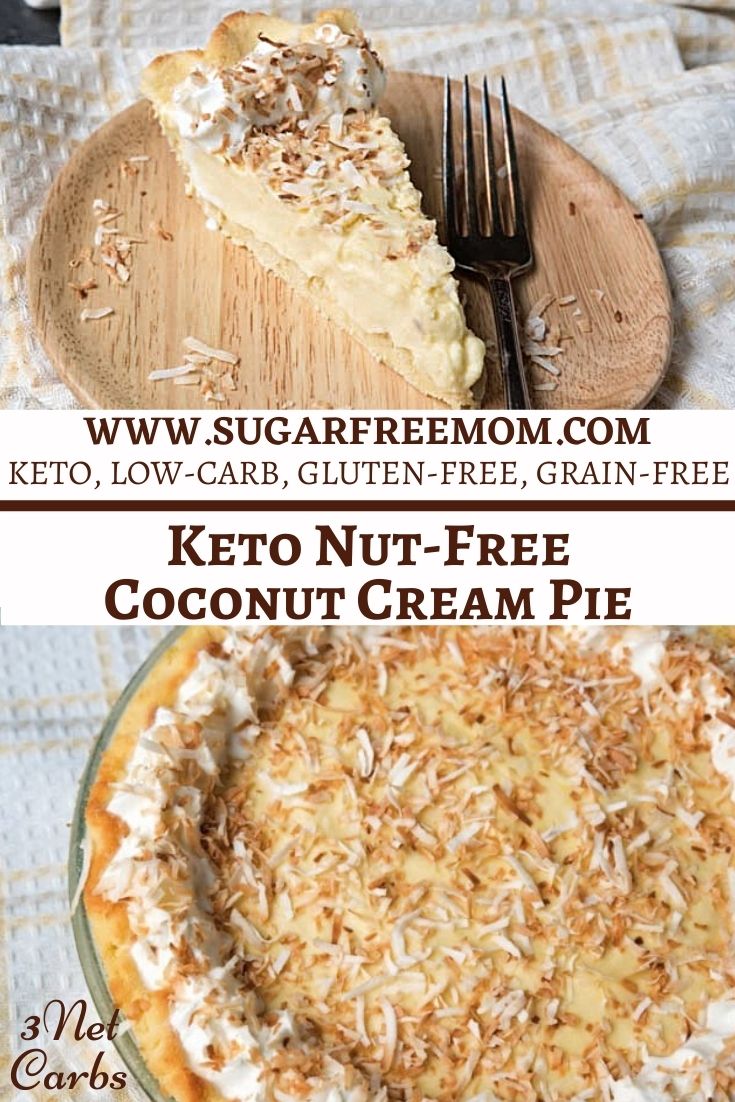
This luscious, sugar-free coconut cream pie is heaven on a fork and not as hard as you think to make at home!
With a low-carb flaky pie crust, a silky coconut cream filling, and just 3 grams of net carbs per serving, this is the kind of dessert that makes you forget you’re eating sugar-free. It’s a true classic dessert made for keto and sugar free.
If you’ve ever thought coconut cream pie was too complicated, let me reassure you: while there are a few steps, this recipe is absolutely doable at home—even if this is your first time making a homemade custard-style filling.
All nutritional information is at the bottom of this page on the printable recipe card.
All coconut lovers will appreciate this luscious keto coconut cream pie made with a homemade gluten-free pie crustand a rich, creamy coconut custard filling that sets perfectly in the refrigerator.
Each bite delivers that unmistakable coconut flavor you remember from grandma’s time—without the sugar overload.
Traditional coconut cream pie is loaded with sugar, refined flour, and pudding mix, making it impossible to enjoy on a low-carb or keto diet. This low-carb coconut cream pie skips all of that while still achieving the same luxurious texture using simple, real ingredients.
Using egg yolks instead of whole eggs is the secret to achieving a smooth, velvety custard filling. Egg yolks create richness and help the filling set properly without becoming rubbery or eggy.
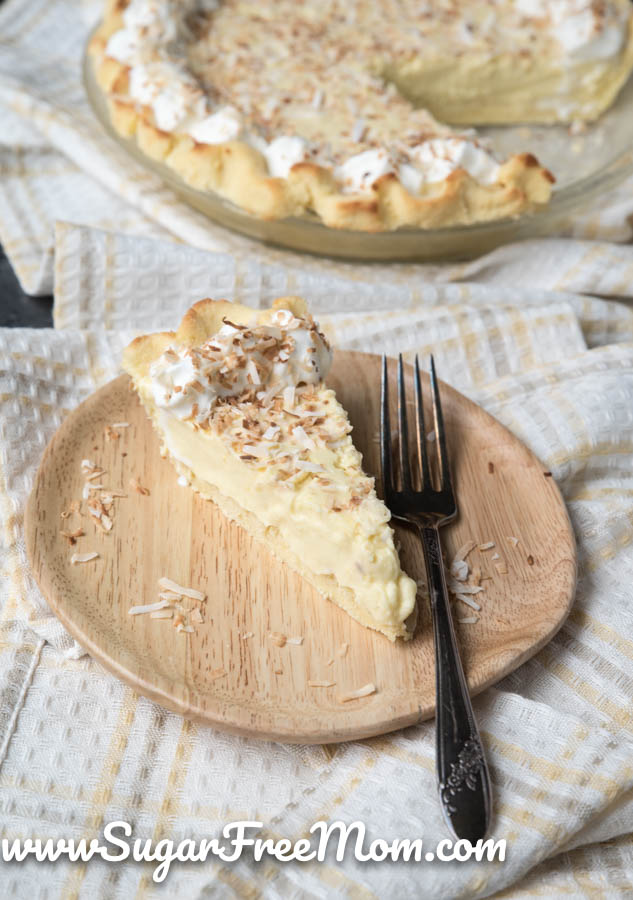
Coconut Cream Pie vs. Coconut Custard Pie
While these two desserts are often confused, there is a clear difference between a coconut cream pie and a coconut custard pie.
- Coconut Custard Pie: The filling is poured into the crust and baked in the oven. It’s a simpler method and creates a firmer, more egg-forward texture.
- Coconut Cream Pie: The filling is cooked on the stovetop in a large saucepan over medium-low heat, thickened first, then poured into a baked pie crust and chilled until fully set.
This easy coconut cream pie recipe is a true coconut cream pie, meaning the filling is cooked, thickened, and cooled before slicing. The result is a rich custard-style filling that holds its shape beautifully.
If you’re looking for a dairy-free option, my sugar-free coconut custard pie is a great alternative since it relies solely on coconut milk and eggs.
The Keto Pie Crust Options
You have a few excellent choices when it comes to the crust part of this recipe. Each option works well depending on your dietary needs. Unlike traditional pie crust, ours does not have any wheat flour, and all options offer you a gluten-free pie crust.
Low-Carb Flaky Pie Crust
This is my go-to keto pie crust, made with coconut flour not almond flour, coconut oil or butter, and exact measurements to ensure success. It bakes up golden brown and sturdy enough to hold the creamy filling.
This is a nice complement to the coconut flavor and is also a nut free alternative for those with tree nut allergies!
Crustless Option
If you prefer, you can skip the crust entirely and serve the coconut cream filling in individual bowls or ramekins for an easy, elegant dessert.
Making the Creamy Coconut Filling
The heart of this recipe is the creamy coconut filling. Here’s what makes it work:
- Egg yolks (tempered slowly to avoid scrambling)
- Heavy cream and canned coconut milk for richness
- Unsweetened shredded coconut for texture
- Xanthan gum to help the filling set
- Vanilla extract and coconut extract for flavor depth
When cooking the filling, stir constantly with a wooden spoon, making sure to scrape the back of a spoon along the bottom of the saucepan. You’ll know the filling is ready when it thickens enough to coat the spoon.
Once thickened, pour the filling into the baked pie crust, smooth the top of the pie, and cover directly with plastic wrap to prevent a skin from forming. Chill for several hours or overnight.
Can I skip the Unsweetened Shredded Coconut?
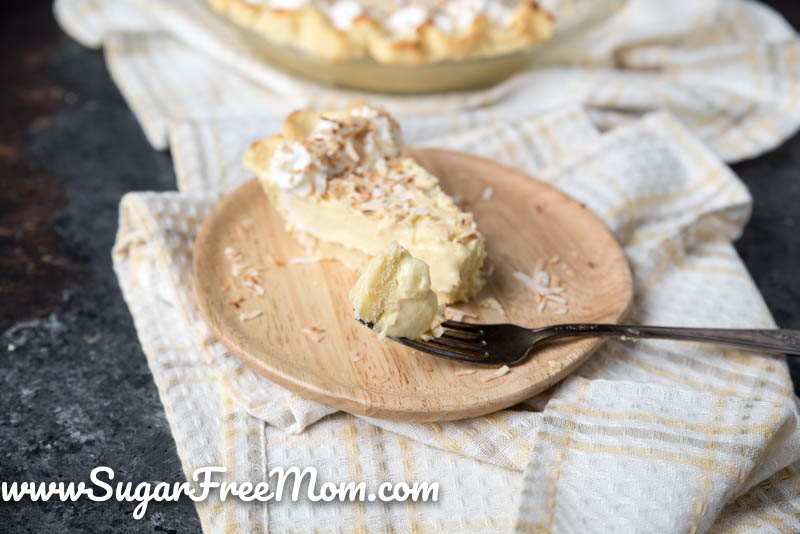
Yes! If you’re not a fan of coconut texture, simply leave out the unsweetened shredded coconut. The result will be an ultra-smooth custard filling.
For added flexibility, you can toast unsweetened coconut flakes separately and sprinkle them over the surface just before serving. This gives guests the option to customize their slice.
Whipped Cream Topping
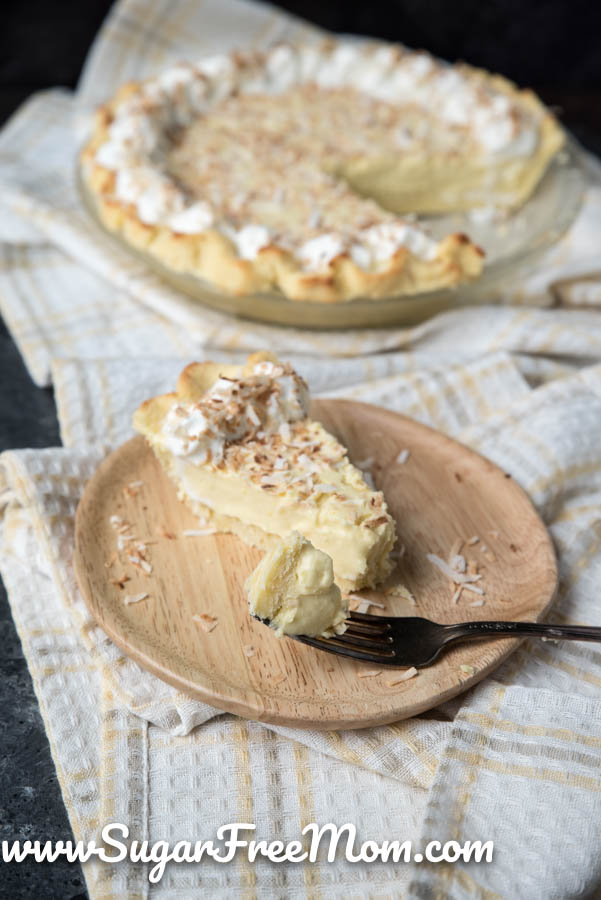
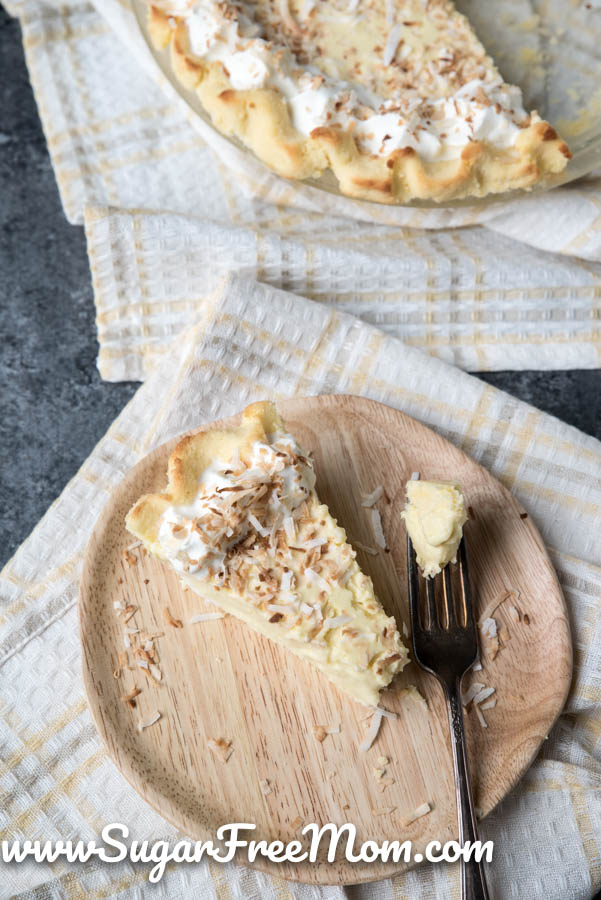
No low carb coconut cream pie is complete without a fluffy whipped cream topping.
Use cold heavy whipping cream and beat in a large mixing bowl until stiff peaks form. Lightly sweeten with your preferred low-carb sweetener and add a splash of vanilla extract.
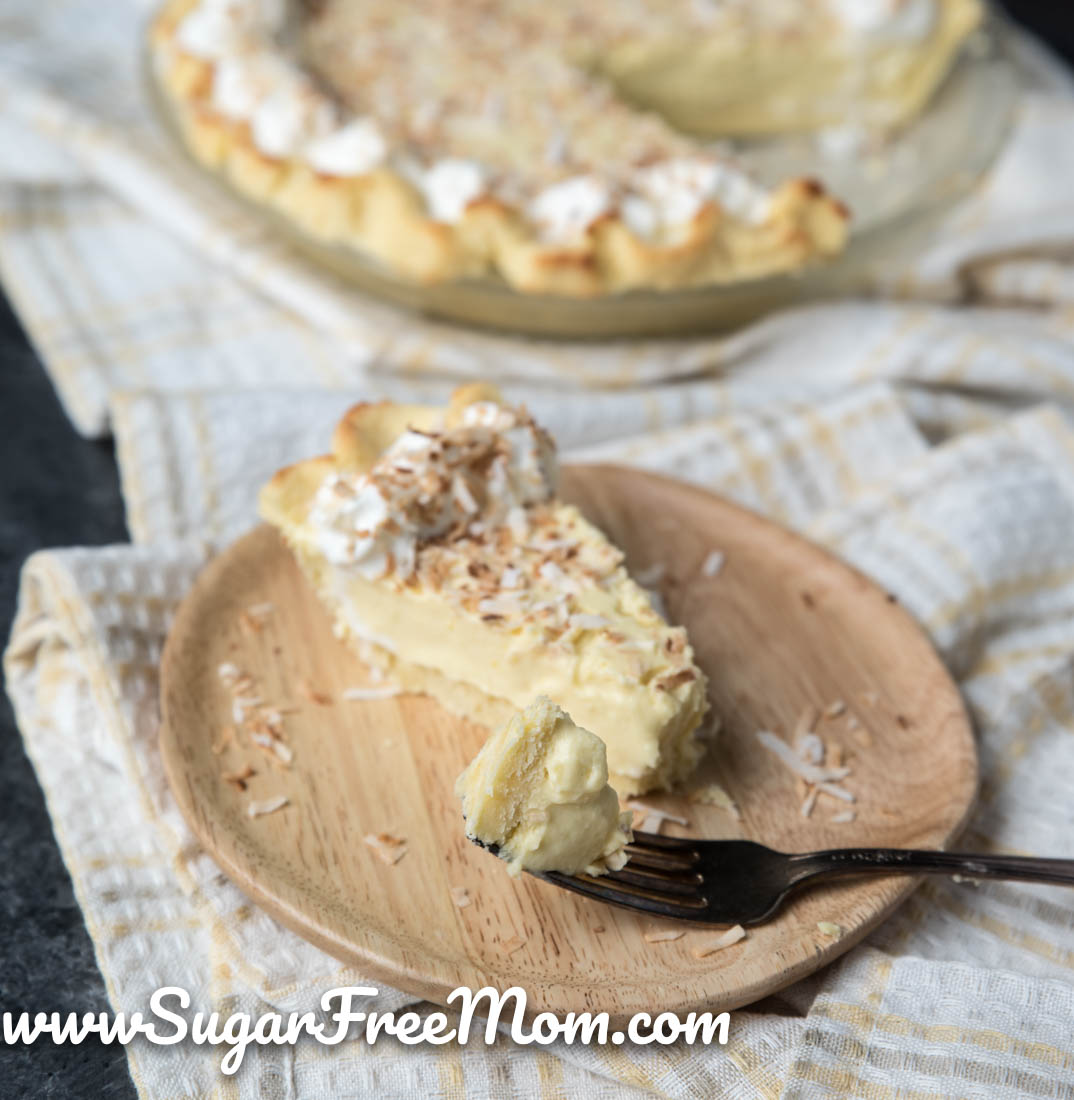
Spread or pipe the whipped topping over the chilled pie, then garnish with toasted coconut flakes for a beautiful finishing touch.
You can also use my favorite whipped cream canister!
Low Carb Sweetener Swaps
There are many sugar-free sweeteners on the market today: figuring out which is the best to use for one purpose or another can be quite confusing.
Unfortunately, the product labels can be misleading, and not all sugar-free sweeteners are created equal.
Choosing the right sugar-free sweetener makes all the difference. Over the years, I’ve tested them all—from stevia to erythritol and monk fruit to allulose.
For creamy desserts like this one, allulose or a monk fruit blend works best because they dissolve smoothly and don’t recrystallize.
When I first went sugar-free in 2004, I didn’t know any sugar-free sweeteners beyond aspartame, Splenda and stevia.
I tried several artificial sweeteners, and after two years sugar-free, my sugar cravings were still just as bad, if not worse. That was when I decided to start creating recipes with natural sugar-free sweeteners and nothing artificial.
The most natural sugar free sweeteners are stevia, Monk fruit, and Allulose, but there are some big differences when it comes to using these in your recipes.
Here’s my extensive Natural Sweetener Guide and Conversion Chart that will help you determine which sweetener to use for certain baking needs and how much to use compared to other sweeteners I might use in my recipes.
Coconut is Not a Tree Nut
Despite common belief, coconut is not a botanical nut—it’s a fruit called a drupe. While the FDA lists coconut as a tree nut for labeling purposes, many people with tree nut allergies can safely consume coconut.
As always, if you have allergies, consult your allergist before trying new ingredients.
The American College of Allergy, Asthma and Immunology says it well: “Coconut is not a botanical nut: it is classified as a fruit, even though the FDA recognizes coconut as a tree nut. While allergic reactions to coconut have been documented, most people who are allergic to tree nuts can safely eat coconut. If you are allergic to tree nuts, talk to your allergist before adding coconut to your diet.”
More Keto Coconut Desserts
- Coconut Lime Cheesecake
- Lime Coconut Yogurt Chocolate Cups
- Coconut Flan
- Chocolate Coconut Cookies
- Dairy Free Chocolate Coconut Popsicles
Storage Tips
- Cover the pie tightly with plastic wrap or if leftover pieces store in an airtight container in the fridge.
- Store in the refrigerator for up to 7 days
- Best served chilled
This delicious keto coconut cream pie actually tastes even better the next day, once the filling has fully set.
Keto Coconut Cream Pie Recipe

Sugar Free Keto Coconut Cream Pie
Ingredients
- 1 pre-made coconut flour pie crust
- 13.5 ounces canned coconut milk
- 1/2 cup Monk Fruit Allulose Confectioners
- 1/4 teaspoon salt
- 1 teaspoon coconut extract
- 4 large egg yolks
- 2 teaspoons gelatin
- 4 ounces cream cheese
- 1 cup heavy cream
- 1/2 teaspoon coconut stevia or to taste
- 1 cup unsweetened shredded coconut divided in half (OPTIONAL)
Instructions
-
In a large saucepan, over medium low heat, add the coconut milk, sweetener, salt, and extract. Stir to combine. Do not boil.
-
Whisk the eggs in a small bowl. Temper the eggs by adding a small amount of the coconut mixture into the eggs a little at a time. Do this 3 times then stir in all the eggs into the sauce pan on the stove. Bring to a simmer. Sprinkle the gelatin over the coconut milk and whisk until dissolved. Continue to stir until mixture thickens and internal temperature is 175 degrees F. Remove from the heat. Allow coconut mixture to cool about 1 hour.
-
Add the cream cheese to the stand mixer with the paddle attachment and blend until smooth. If you are using the optional shredded coconut, add it to a dry skillet and cook on low heat, stirring constantly, until browned. Once cream cheese is smooth, pour in half the toasted coconut and blend through. Save remaining for topping.
-
Add the cooled coconut mixture to the cream cheese in the stand mixer. Blend until well combined and smooth. Taste and adjust sweetener. Pour in 1 cup heavy cream and liquid stevia, switch to the whisk attachment and whisk on medium speed for about 10 minutes to slightly thicken. Taste and adjust sweetener. Pour the batter into the pie crust.
-
If using optional shredded coconut, sprinkle remaining shredded coconut over the pie and refrigerate 6 hours or overnight. Optional topping: When you are ready to serve, use a whipped cream canister to decorate crust of pie.
Video
Notes
Nutrition
The post Easy Sugar Free Low Carb Keto Coconut Cream Pie appeared first on Sugar-Free Mom.


0 comments :
Post a Comment